Multiplying Your Collection: Plant Propagation
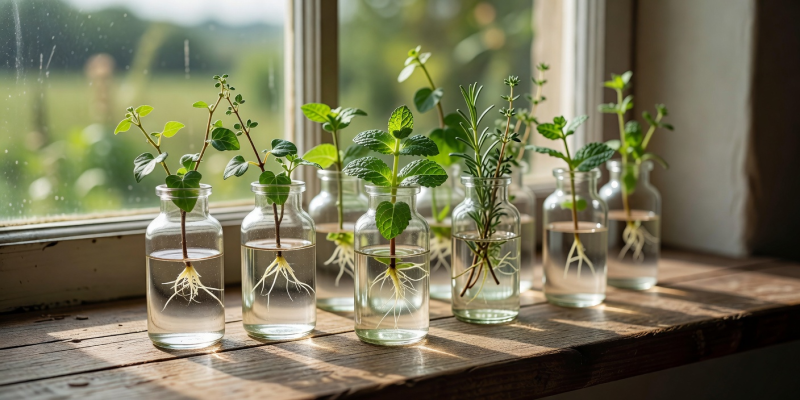
Propagation is arguably the most rewarding aspect of plant care. It transforms a consumer of plants into a cultivator. By harnessing a plant’s natural ability to generate new tissues, you can clone your favorite specimens, salvage dying plants, and share your collection with others. While it may seem like advanced botany, the basic principles of propagation are highly accessible.
Understanding Nodes
The most common reason cuttings fail is improper cutting placement. For most vining and stemming houseplants (like Pothos, Philodendrons, and Monsteras), new root growth will only emerge from a specific botanical structure called a node.
A node is the point on a stem where a leaf attaches. It contains concentrated growth cells capable of differentiating into either aerial roots, subterranean roots, or new shoots. If you cut a length of stem that does not include a node (an internode cutting), it may stay green in water for months, but it will never generate roots. Always make your cut about a half-inch below a healthy node.
Water Propagation
Water propagation is the most popular method for beginners because it allows you to visually monitor root development.
- Take a healthy cutting containing 1-3 nodes and a few leaves.
- Remove any leaves that would sit below the waterline, as submerged foliage will rot and foul the water.
- Place the cutting in a clean vessel filled with room-temperature water, ensuring the nodes are submerged.
- Place the vessel in bright, indirect light.
- Change the water every 5-7 days to replenish oxygen and prevent bacterial buildup.
Once secondary roots (smaller roots branching off the main white taproots) reach about 2 inches in length, the cutting is ready to transition to soil.
Soil and Sphagnum Moss Rooting
While water propagation is visually satisfying, "water roots" are physiologically different from "soil roots"—they are more fragile and lack microscopic root hairs. Transitioning from water to soil can shock the cutting. Therefore, many growers prefer to root cuttings directly into a solid medium.
Moist sphagnum moss or a mixture of perlite and peat provides an excellent environment. The medium holds ambient moisture against the node while maintaining high oxygen flow. Keeping the cutting inside a clear plastic storage box or under a cloche traps humidity, replicating greenhouse conditions and drastically increasing success rates for tropical cuttings.
Propagation by Division
Not all plants can be propagated via stem cuttings. Many clumping plants, such as Calatheas, Peace Lilies, and Sansevierias, grow from underground rhizomes or basal offshoots. To propagate these, you must use division.
Unpot the mature plant and gently massage the root ball to loosen the soil. You will naturally see where the plant has formed distinct, individual clusters, each with its own root system and foliage. Carefully tease these clusters apart, using sterile pruners to snip connecting rhizomes if necessary. Pot the new divisions in appropriately sized containers—potting them in overly large containers increases the risk of root rot before the plant establishes itself.
The Role of Rooting Hormone
While many easy-care houseplants root readily without assistance, woody stems or stubborn species benefit greatly from rooting hormones. Available as powders or gels, these products contain synthetic auxins (plant hormones) and usually a mild fungicide. Dipping the cut end of a stem into rooting hormone before placing it in soil can speed up root initiation and protect the open wound from infection.